Arculus and Tangem represent two leading card-based hardware wallets that use NFC technology for tap-to-sign transactions, but they differ significantly in pricing, security approach, and target users. Arculus costs $99 per single card with three-factor authentication including biometric verification, while Tangem offers 2-card sets starting at $49.41 with a unique seedless backup system using multiple identical cards. Both wallets provide EAL6+ certified security and air-gapped cold storage, making them safe choices for cryptocurrency protection.
Key Differences Between Arculus and Tangem
Pricing and Value Comparison
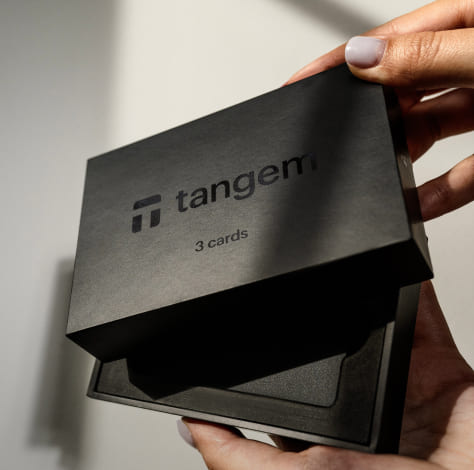
Tangem(Links may be affiliate links) delivers superior affordability with its 2-card set priced at approximately $54.90 (or $49.41 with a 10% discount code), and the 3-card set at around $70. This pricing includes backup cards in the same package, providing built-in redundancy without additional purchases.
Arculus positions itself as a premium option at $99 per single key card. Users who want backup protection must purchase additional cards separately, effectively doubling or tripling the total cost compared to Tangem’s bundled approach.
For budget-conscious users or cryptocurrency beginners, Tangem offers better value by including backup cards that prevent single points of failure. The lower entry price makes professional-grade hardware security accessible to users with smaller portfolios.
Arculus justifies its higher price through premium features including biometric authentication, broader cryptocurrency support, and advanced mobile app functionality. Users prioritizing these features may find the additional cost worthwhile.
Security Architecture
Both wallets employ EAL6+ certified secure element chips, representing the highest commercial-grade security certification available. This certification level matches security standards used in passports and modern payment cards.
Arculus implements three-factor authentication combining biometric verification (fingerprint or face recognition), PIN code, and the physical key card itself. This layered security approach provides multiple barriers against unauthorized access.
Tangem uses a different security philosophy with its seedless backup system. Instead of requiring users to manage recovery phrases, Tangem generates identical private keys across 2-3 cards during initial setup. Each card functions as a complete backup without exposing seed phrases to potential theft or loss.
Both wallets maintain air-gapped designs using NFC communication exclusively, avoiding USB or Bluetooth connections that create potential attack vectors. Private keys never leave the secure element chip in either wallet.
Design and Portability
Arculus features a slim, minimalist card design described as modern and sleek. The credit-card form factor fits easily in standard wallets without adding bulk.
Tangem cards are slightly more compact and emphasize extreme durability. The cards resist water damage, physical bending, dust exposure, and temperature extremes. This rugged construction ensures the wallet survives harsh conditions that might damage typical electronics.
Neither wallet requires batteries or charging, eliminating maintenance concerns and ensuring the devices remain functional for decades. The battery-free design also removes potential vulnerabilities associated with power management systems.
Both wallets use identical tap-to-sign NFC functionality, requiring users to place the card against their smartphone to authorize transactions. This contactless approach feels familiar to users accustomed to modern payment cards.
Cryptocurrency and Asset Support
Arculus supports a broader range of cryptocurrencies and digital assets compared to Tangem. The wallet accommodates over 10,000 different tokens across multiple blockchain networks, making it suitable for diverse portfolios.
NFT support is integrated into Arculus, allowing users to view, manage, and transfer non-fungible tokens directly through the wallet interface. This feature appeals to collectors and creators actively participating in NFT markets.
Tangem supports over 6,000 cryptocurrencies across 84 blockchain networks, covering all major assets including Bitcoin, Ethereum, Solana, Polygon, and popular stablecoins. While fewer than Arculus, this selection satisfies most users’ needs for standard cryptocurrency holdings.
The asset support difference matters most for users holding obscure altcoins or extensive NFT collections. Mainstream cryptocurrency holders will find both wallets adequate for their needs.
Mobile App Experience
Arculus depends heavily on its mobile application for wallet functionality, portfolio management, and transaction processing. The app provides advanced features including portfolio tracking, price charts, and market data.
The Arculus app enables in-wallet cryptocurrency purchases, swaps, and conversions without connecting to external platforms. This integrated approach simplifies portfolio management but increases reliance on the app’s availability and security.
Tangem’s mobile app follows a more minimalist philosophy, focusing on core wallet functions including sending, receiving, and basic portfolio viewing. The simplified interface reduces complexity for beginners while maintaining essential functionality.
Both apps require NFC-enabled smartphones to function, as the cards communicate exclusively through NFC technology. Users without NFC-capable devices cannot access their wallets, representing a significant limitation for both options.
Backup and Recovery Methods
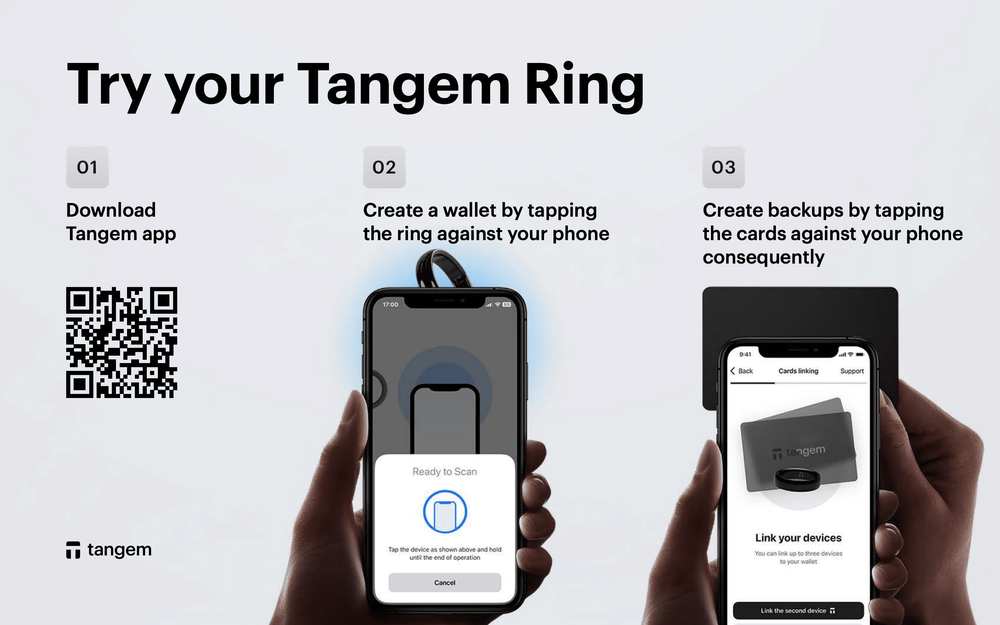
Tangem’s backup system eliminates traditional seed phrases entirely. During initial setup, the wallet generates private keys inside the first card’s secure element, then writes identical copies to backup cards. Users store these backup cards in separate secure locations.
If the primary Tangem card is lost or damaged, users simply scan a backup card to regain full wallet access. No recovery phrase entry or complex restoration process is required.
Arculus uses a more conventional approach with recovery phrases that users must write down and store securely. If the Arculus card is lost and no backup card exists, users can restore their wallet by entering the recovery phrase into the Arculus app on a new card.
The recovery phrase system provides flexibility but introduces vulnerability points. Physical or digital exposure of seed phrases allows attackers to steal funds without possessing the hardware card.
Tangem’s seedless approach eliminates this vulnerability but makes backup card security critical. Losing all Tangem cards simultaneously results in permanent fund loss, as no recovery phrase exists as a fallback.
Target User Demographics
Tangem explicitly targets cryptocurrency beginners and casual users seeking simple, durable wallet solutions. The straightforward setup process, seedless backup, and minimalist app design reduce barriers to entry for first-time hardware wallet users.
The lower price point makes Tangem accessible to users with smaller portfolios who want professional security without premium costs. Students, new investors, and budget-conscious users find Tangem’s value proposition compelling.
Arculus positions itself for intermediate to advanced users who appreciate sophisticated features and broader asset support. Tech-savvy investors managing diverse portfolios across multiple blockchains benefit from Arculus’s expanded functionality.
Users comfortable with biometric authentication, mobile app dependency, and premium pricing find Arculus’s feature set worth the additional investment.
Detailed Feature Comparison
Security Comparison Table
| Security Feature | Arculus | Tangem |
|---|---|---|
| Secure Element Certification | EAL6+ | EAL6+ |
| Authentication Method | 3FA (Biometric + PIN + Card) | Card + Access Code |
| Backup System | Recovery Phrase + Additional Cards | Multiple Identical Cards |
| Air-Gapped Design | Yes (NFC Only) | Yes (NFC Only) |
| Tamper Resistance | Secure Element Protection | Secure Element Protection |
| Open Source | No | No |
Both wallets achieve excellent security through certified hardware, but their authentication philosophies differ significantly. Arculus emphasizes multi-factor verification, while Tangem prioritizes physical backup redundancy.
Usability Comparison Table
| Usability Feature | Arculus | Tangem |
|---|---|---|
| Setup Time | 10-15 minutes | 3-5 minutes |
| App Complexity | Advanced Features | Simplified Interface |
| NFC Requirement | Yes | Yes |
| Battery Needed | No | No |
| Learning Curve | Moderate | Minimal |
| Desktop Support | Mobile Only | Mobile Only |
Tangem wins on simplicity and speed, making it ideal for users who value straightforward functionality over advanced features. Arculus provides more capabilities for users willing to navigate a more complex interface.
Asset Support Comparison Table
| Asset Category | Arculus | Tangem |
|---|---|---|
| Total Cryptocurrencies | 10,000+ | 6,000+ |
| Bitcoin Support | Yes | Yes |
| Ethereum Support | Yes | Yes |
| NFT Support | Full Integration | Basic Support |
| DeFi Integration | Via WalletConnect | Via WalletConnect |
| Custom Tokens | Yes | Yes |
Arculus provides superior breadth for users with exotic altcoins or extensive NFT collections. Tangem covers all mainstream assets adequately for typical portfolios.
Advantages of Arculus Wallet
Three-Factor Authentication Security
Arculus’s combination of biometric verification, PIN codes, and physical card possession creates exceptional security against unauthorized access. An attacker would need to compromise all three factors simultaneously to access funds.
Biometric authentication using fingerprint or facial recognition provides convenience without sacrificing security. Users can authorize transactions quickly while maintaining strong protection against theft.
Extensive Cryptocurrency Portfolio Support
Users managing diverse portfolios across multiple blockchain ecosystems benefit from Arculus’s support for over 10,000 different assets. This broad compatibility eliminates the need for multiple wallets to accommodate different cryptocurrencies.
The wallet regularly adds support for newly launched tokens and trending projects, keeping pace with the rapidly evolving cryptocurrency market. Advanced users appreciate this flexibility for exploring emerging opportunities.
Integrated NFT Management
Arculus provides comprehensive NFT functionality including viewing, transferring, and managing non-fungible tokens directly through the mobile app. Users can see their NFT artwork, verify authenticity, and execute transfers without external platforms.
This integration appeals to digital collectors, artists, and traders who actively participate in NFT markets across Ethereum, Polygon, and other supported networks.
Premium Design Quality
The sleek, modern aesthetic of Arculus cards reflects the premium positioning and attention to design detail. Users who appreciate refined products find the visual appeal and build quality impressive.
The minimalist design philosophy extends to the mobile app interface, which emphasizes clean layouts and intuitive navigation.
Disadvantages of Arculus Wallet
Higher Price Point
At $99 per card, Arculus costs approximately double the price of a Tangem 2-card set. Users wanting backup protection must purchase additional cards, potentially tripling total costs.
This premium pricing creates barriers for budget-conscious users or those with smaller cryptocurrency holdings who find the investment disproportionate to their portfolio value.
Mobile App Dependency
Arculus functionality relies entirely on the mobile application, increasing exposure to online attack vectors compared to fully offline cold storage solutions. App vulnerabilities, server issues, or platform shutdowns could impact wallet accessibility.
Users concerned about maximum security may view this app dependency as a compromise compared to hardware wallets with on-device verification screens.
Recovery Phrase Vulnerability
While Arculus supports recovery phrases for wallet restoration, this introduces the classic seed phrase vulnerabilities that card-based wallets attempt to avoid. Physical or digital exposure of recovery phrases compromises wallet security regardless of hardware protection.
Users must maintain secure storage for recovery phrases, adding complexity to backup management.
Limited Offline Functionality
The requirement for a mobile app and internet connection during setup and certain operations reduces Arculus’s utility in fully offline environments. Users seeking maximum air-gapped security may find these connectivity requirements concerning.
Advantages of Tangem Wallet
Seedless Backup System
Tangem eliminates traditional recovery phrases entirely, removing the most common vulnerability in cryptocurrency self-custody. Users never need to write down, type, or digitally store seed phrases that could be stolen or lost.
The multi-card backup approach provides physical redundancy that feels more intuitive and secure than paper-based backup systems. Each card functions as a complete backup without exposing sensitive information.
Superior Affordability
Starting at approximately $50 for a 2-card set (or $45 with discount codes), Tangem offers exceptional value for hardware wallet security. The included backup cards mean users receive complete protection at the base price without additional purchases.
This accessibility democratizes professional-grade cryptocurrency security for users with limited budgets or smaller portfolios.
Extreme Durability
Tangem cards withstand water immersion, physical bending, extreme temperatures, and other environmental hazards that would destroy typical electronics. This ruggedness ensures long-term reliability even in challenging storage conditions.
The 25-year warranty reflects confidence in the cards’ longevity and build quality. Users can rely on Tangem for decades of service without concerns about degradation or failure.
Beginner-Friendly Design
The simplified setup process takes approximately 3-5 minutes from unboxing to first use, making Tangem one of the easiest hardware wallets to initialize. The mobile app’s minimalist interface reduces confusion for cryptocurrency newcomers.
This accessibility encourages users to adopt proper security practices rather than leaving funds on exchanges due to hardware wallet complexity.
Disadvantages of Tangem Wallet
Limited Advanced Features
Tangem focuses on core wallet functionality without integrated staking, DeFi protocols, or advanced portfolio management tools. Users seeking these features must connect to external platforms through WalletConnect.
Advanced cryptocurrency users may find Tangem’s feature set insufficient compared to competitors offering built-in yield generation and protocol integration.
Fewer Supported Assets
While Tangem supports over 6,000 cryptocurrencies, this total falls short of Arculus’s 10,000+ asset compatibility. Users holding obscure altcoins may find certain tokens unsupported.
Manual token addition through contract addresses provides some flexibility, but this process requires technical knowledge that contradicts Tangem’s beginner-friendly positioning.
No Built-in Biometric Authentication
Tangem relies on physical card possession and optional access codes rather than biometric verification. Users who appreciate fingerprint or facial recognition security may miss these features.
The simpler authentication model reduces security layers compared to Arculus’s three-factor approach.
Backup Card Management Requirement
Users must carefully manage multiple physical cards and store them in separate secure locations. Losing all cards simultaneously results in permanent fund loss with no recovery option.
This physical security burden may feel less convenient than recovery phrase systems that allow restoration from memorized words or digital backups.
Price and Value Analysis
Total Cost of Ownership
Tangem provides complete backup protection at $54.90 for the 2-card set or approximately $70 for the 3-card set. No additional purchases are required for full functionality and redundancy.
Arculus requires $99 for a single card, with backup protection necessitating a second $99 purchase. Users wanting Tangem’s level of redundancy would spend $297 for three Arculus cards versus $70 for Tangem’s 3-card set.
The 4x price difference for equivalent backup coverage makes Tangem significantly more economical. However, Arculus users receive additional features and broader asset support that may justify the premium for certain use cases.
Long-Term Value Considerations
Both wallets require no ongoing subscriptions, fees, or replacement costs under normal use. The one-time purchase provides decades of service without additional expenses.
Tangem’s 25-year warranty and battery-free design ensure minimal long-term costs. The low initial price means even users with small portfolios achieve positive security ROI quickly.
Arculus’s higher upfront cost requires larger portfolios to justify the investment from a value perspective. Users with five-figure or larger holdings find the premium worthwhile for advanced features and expanded asset support.
Discount Codes and Promotions
Tangem frequently offers 10% discount codes through affiliate partners, reducing the 2-card set to approximately $49.41. Seasonal promotions during Black Friday and other events provide 15-20% discounts.
Arculus discount availability is less widespread, with the $99 price point remaining relatively stable throughout the year. Users seeking the best value should watch for occasional promotional periods.
Security Comparison Deep Dive
Certification and Testing
Both Arculus and Tangem utilize secure element chips certified at EAL6+ under Common Criteria standards. This certification involves rigorous independent testing of hardware and software security mechanisms.
The EAL6+ rating represents semi-formally verified design and testing, significantly exceeding typical consumer electronics security standards. Only the most security-critical applications like national ID cards and payment systems achieve this certification level.
Third-party security audits have verified both wallets’ implementations, though neither publishes fully open-source firmware that allows community code review. Users must trust the manufacturers’ security processes and independent auditor assessments.
Attack Vector Analysis
Both wallets maintain air-gapped designs using NFC exclusively, eliminating remote exploitation vectors associated with USB, Bluetooth, or WiFi connections. Attackers cannot compromise the wallets through internet-based attacks.
Physical attacks requiring card possession face secure element protections that destroy private keys if tampering is detected. Side-channel attacks attempting to extract keys through power analysis or electromagnetic monitoring encounter hardware countermeasures built into EAL6+ certified chips.
The primary security difference lies in authentication approaches. Arculus’s three-factor system provides additional barriers if a card is stolen, requiring attackers to also compromise biometric data and PIN codes. Tangem’s physical possession model assumes proper backup card storage in separate secure locations prevents simultaneous compromise.
Data Privacy Considerations
Both wallets require mobile apps that connect to company servers for certain functionality. This connectivity raises questions about data collection, storage, and potential exposure in server breaches.
Privacy-conscious users should research each company’s data policies and server security practices. Neither wallet claims to collect transaction history or portfolio data, but app analytics and account information may be stored.
Users seeking maximum privacy should consider hardware wallets with on-device screens and open-source code that eliminate server dependencies.
Use Case Recommendations
Best for Cryptocurrency Beginners
Tangem excels as a first hardware wallet for cryptocurrency newcomers. The quick 3-5 minute setup, seedless backup approach, and simplified mobile app reduce intimidation factors that prevent beginners from adopting proper security.
The affordable price point means new users can protect even small portfolios without significant upfront investment. As holdings grow, the same Tangem wallet scales to accommodate larger amounts without requiring upgrades.
Best for Advanced Portfolio Managers
Arculus serves intermediate to advanced users managing diverse portfolios across multiple blockchain ecosystems. The broad asset support, NFT integration, and advanced app features provide tools that sophisticated users need.
Users actively trading, collecting NFTs, or participating in DeFi protocols benefit from Arculus’s comprehensive functionality. The three-factor authentication provides peace of mind for larger holdings.
Best for Long-Term Cold Storage
Tangem’s extreme durability and battery-free design make it ideal for long-term storage scenarios. Users planning to hold cryptocurrency for years or decades benefit from Tangem’s 25-year warranty and rugged construction.
The seedless backup system eliminates concerns about fading ink on paper seed phrases or degrading written backups over extended periods. Physical cards stored properly maintain integrity indefinitely.
Best for Mobile-First Users
Both wallets target mobile-first users through NFC functionality and smartphone app dependencies. Neither offers desktop software or hardware connectivity to computers.
Users who primarily manage cryptocurrency through mobile devices find both options suitable. The choice depends on whether simplicity (Tangem) or advanced features (Arculus) better matches user preferences.
Best for Budget-Conscious Security
Tangem provides superior value for users prioritizing security on limited budgets. The included backup cards at $50-70 total cost deliver complete protection at a fraction of Arculus’s price.
Students, new investors, and users with smaller portfolios achieve professional-grade security without premium pricing. The low barrier to entry encourages adoption of best practices.
Frequently Asked Questions
Which Wallet Is More Secure: Arculus or Tangem?
Both wallets provide equivalent baseline security through EAL6+ certified secure elements and air-gapped designs. Arculus adds three-factor authentication layers, while Tangem emphasizes physical backup redundancy.
For users who properly manage backup cards in separate locations, Tangem’s seedless approach eliminates recovery phrase vulnerabilities. For users preferring biometric authentication and PIN protection against theft, Arculus provides additional security layers.
Can I Use Both Wallets Together?
Yes, cryptocurrency users commonly employ multiple hardware wallets for portfolio diversification and risk management. You could store Bitcoin on Tangem while keeping altcoins on Arculus, or use one wallet as primary storage and the other as a backup solution.
Using different wallet brands provides redundancy against manufacturer-specific vulnerabilities or company failures.
Which Wallet Has Better Customer Support?
Customer support quality varies by region and issue type for both companies. Both offer email support and online help centers with setup guides and troubleshooting documentation.
User reviews suggest response times and support quality are comparable between the two options. Neither provides phone support, relying instead on ticket-based systems and community forums.
Are These Wallets Compatible with Each Other?
No, Arculus and Tangem use different security architectures and cannot share wallets or backup each other. Private keys generated on Tangem cards cannot be imported to Arculus, and vice versa.
Users switching between wallets must create new wallet addresses and transfer cryptocurrency from the old wallet to the new one.
Which Wallet Is Easier to Set Up?
Tangem offers faster and simpler setup, taking approximately 3-5 minutes from unboxing to first use. The streamlined process involves downloading the app, scanning your cards, and creating backup copies.
Arculus setup takes 10-15 minutes and involves additional steps including biometric registration, PIN creation, and recovery phrase backup. The extra time reflects the more complex security features.
Can I Recover My Wallet If I Lose My Card?
Arculus users can recover wallets using the recovery phrase written during initial setup, even if all physical cards are lost. This provides a safety net but introduces seed phrase vulnerabilities.
Tangem users must possess at least one backup card to recover wallet access if the primary card is lost. Losing all Tangem cards simultaneously results in permanent fund loss, as no recovery phrase exists.
Which Wallet Supports More Cryptocurrencies?
Arculus supports over 10,000 cryptocurrencies and tokens, exceeding Tangem’s 6,000+ asset compatibility. This difference matters primarily for users holding obscure altcoins or extensive token collections.
Both wallets support all major cryptocurrencies including Bitcoin, Ethereum, and popular stablecoins. Mainstream users will find either wallet adequate for their needs.
Do These Wallets Work Without Internet?
Both wallets generate and store private keys completely offline within secure element chips. However, the mobile apps require internet connectivity for certain functions including portfolio value display, transaction broadcasting, and app updates.
Transaction signing happens offline using NFC communication between card and phone. The signed transaction must then be broadcast to the blockchain network via internet connection.
Summary
Arculus and Tangem represent different philosophies in card-based hardware wallet design, with Arculus emphasizing premium features and broad asset support at $99 per card, while Tangem focuses on affordable simplicity at $50-70 for complete multi-card sets. Both provide EAL6+ certified security through air-gapped NFC designs, but Arculus implements three-factor biometric authentication compared to Tangem’s seedless physical backup approach. Beginners and budget-conscious users benefit from Tangem’s straightforward setup and included backup cards, while advanced users managing diverse portfolios across 10,000+ assets may prefer Arculus’s comprehensive functionality despite the higher cost. Neither wallet is objectively “better”—the optimal choice depends on individual priorities regarding price, features, and security philosophy.