Introduction
Tangem hardware wallet has established itself as one of the most versatile cryptocurrency storage solutions on the market, supporting over 6000 cryptocurrencies and tokens across more than 81 blockchain networks. This extensive compatibility makes Tangem an ideal choice for investors with diversified portfolios spanning multiple blockchain ecosystems. Whether you hold mainstream assets like Bitcoin and Ethereum, emerging layer-1 blockchains like Solana and Cardano, or thousands of ERC-20 tokens, Tangem provides secure cold storage with its innovative card-based design. This comprehensive guide explores every aspect of Tangem’s cryptocurrency support, from major blockchains to DeFi integration and custom token features.
Major Blockchain Networks Supported
Bitcoin and Bitcoin-Based Networks
Tangem(Links may be affiliate links) supports the original Bitcoin network, allowing users to securely store and manage BTC with military-grade security. The wallet implements BIP44 and BIP84 derivation path standards, ensuring compatibility with industry-standard Bitcoin transactions. Bitcoin Cash (BCH) is also fully supported, providing users with options for both the original Bitcoin protocol and its faster-transaction alternative.
However, it’s important to note that Tangem currently lacks some advanced Bitcoin features that power users might expect. The wallet does not yet support Taproot (SegWit v1), which offers improved privacy and smart contract capabilities. UTXO control and multi-signature configurations for Bitcoin are also not available. For users primarily focused on basic Bitcoin storage and transactions, these limitations won’t impact daily usage, but advanced users requiring complex Bitcoin management may need to consider these constraints.
Ethereum and EVM-Compatible Chains
Ethereum support represents one of Tangem’s strongest capabilities. The wallet fully supports Ethereum mainnet along with all ERC-20 standard tokens, encompassing thousands of decentralized finance (DeFi) tokens, stablecoins, and project tokens. Major tokens like Uniswap (UNI), Aave (AAVE), Compound (COMP), and popular meme coins like Shiba Inu (SHIB) are all accessible through Tangem.
Beyond Ethereum mainnet, Tangem supports an extensive array of EVM-compatible blockchains and Layer 2 solutions. Polygon (MATIC) provides low-cost transactions for users seeking to avoid high Ethereum gas fees. Arbitrum, Optimism, and Base offer Layer 2 scaling solutions that maintain Ethereum security while dramatically reducing transaction costs. Blast and other emerging Layer 2 networks are also supported.
Additional EVM-compatible chains include Binance Smart Chain (BNB Chain), which hosts a massive ecosystem of DeFi protocols and tokens; Avalanche C-Chain, known for its high throughput and low latency; Fantom Opera, popular for its speed and efficiency; and Cronos, the Crypto.com blockchain. This extensive EVM compatibility means that users can manage assets across multiple chains without needing separate wallet solutions.
Solana Ecosystem
Solana support marks Tangem’s commitment to non-EVM blockchains. Users can store SOL tokens along with SPL tokens native to the Solana ecosystem. The integration allows full transaction capabilities including sending, receiving, and managing Solana-based assets. Tangem also supports native staking for Solana, enabling users to earn rewards directly through the app without connecting to third-party platforms.
It’s worth noting that Solana integration has matured significantly, with early connectivity issues resolved through app updates. Users should ensure they’re running the latest version of the Tangem app for optimal Solana functionality.
Cardano and ADA Support
Cardano (ADA) enjoys full support within the Tangem ecosystem. Users can manage ADA and Cardano native tokens directly through the Tangem app. The wallet supports standard transactions including sending and receiving ADA across the Cardano network.
While native Cardano staking is not yet implemented in the Tangem app, the company has included this feature in its development roadmap. Users interested in Cardano staking should monitor Tangem updates for this highly anticipated functionality.
XRP and Other Major Networks
XRP (Ripple) is fully supported, allowing users to leverage the XRPL network for fast, low-cost transactions. Tron (TRX) is another major network with complete Tangem integration, including native staking capabilities. Litecoin (LTC) and Dogecoin (DOGE) are both supported, providing users with access to these popular Bitcoin alternatives.
Polkadot integration gives users access to the DOT ecosystem, while Ethereum Classic (ETC) and Ethereum PoW offer alternatives for users invested in these networks. The Cosmos ecosystem also receives support, expanding Tangem’s reach into interoperable blockchain networks.
Emerging and Specialized Blockchains
Tangem continues expanding support for emerging blockchain networks. Casper, Areon, DisChain, and Decimal Smart Chain represent newer protocols that Tangem has integrated. This demonstrates the company’s commitment to staying current with blockchain innovation and providing users access to emerging opportunities in the cryptocurrency space.
Multi-Chain Token Support
Stablecoins Across Multiple Networks
Stablecoins represent a critical use case for multi-chain support, and Tangem excels in this area. USDC can be held on Ethereum, Polygon, Solana, Arbitrum, Base, Avalanche, and numerous other networks. This flexibility allows users to choose networks based on transaction costs and speed requirements.
USDT (Tether) is similarly available across multiple chains including Ethereum, Tron, Binance Smart Chain, and others. BUSD (Binance USD) and other major stablecoins also support multi-network functionality. When receiving stablecoins, users must carefully verify that the sending and receiving networks match to prevent permanent loss of funds.
Cross-Chain Asset Management
Managing the same asset across different blockchains requires careful attention to network selection. For example, when purchasing USDC on an exchange, users must note whether they’re acquiring Ethereum-based USDC, Solana-based USDC, or another variant. Each version exists on its respective blockchain and cannot be directly interchanged without using bridge protocols.
Tangem’s interface clearly displays which network each asset resides on, helping users maintain awareness of their multi-chain holdings. This transparency is crucial for avoiding common mistakes like sending tokens to incompatible network addresses.
Custom Token Addition Feature
How to Add Custom Tokens
One of Tangem’s most powerful features is the ability to manually add custom tokens that may not appear in the default token list. This functionality supports over 30 blockchain networks including Arbitrum, Aurora, Avalanche C-Chain, Binance Smart Chain, Base, Blast, Cardano, Ethereum, Fantom Opera, Polygon, and many more.
To add a custom token, users navigate to the Tangem app menu, select Wallet, then Manage Tokens, and tap the Add Custom Token button. After selecting the appropriate blockchain network, users must input the token’s smart contract address, which can be found on platforms like CoinMarketCap, CoinGecko, or blockchain explorers such as Etherscan for Ethereum-based tokens.
Once the contract address is entered, the app typically auto-fills the token name, symbol, and decimal places. If this information doesn’t populate automatically, users must manually enter these details. The derivation path should generally be set to “Default” unless specific circumstances require alternative settings.
Expanding Tangem’s Token Universe
This custom token feature effectively makes Tangem’s token support nearly unlimited. Any token conforming to standard protocols on supported blockchains can be added, even if it’s not officially listed in Tangem’s pre-configured token library. This is particularly valuable for users investing in early-stage projects, regional tokens, or niche DeFi protocols that haven’t gained widespread recognition.
Users should exercise caution when adding custom tokens, ensuring they obtain contract addresses from official sources. Scam tokens with similar names to legitimate projects pose a real threat in the cryptocurrency space, and verifying contract addresses through multiple trusted sources is essential.
NFT Support and Management
Current NFT Capabilities
Tangem’s approach to NFT support has evolved significantly. Initially, the app provided no native NFT viewing or management interface, requiring users to rely on third-party platforms. As of mid-2025, Tangem has introduced NFT portfolio viewing functionality directly within the app, allowing users to see their NFT holdings across supported blockchains.
Users can now view Ethereum-based NFTs (ERC-721 and ERC-1155 standards) and Solana NFTs within their Tangem wallet interface. The app displays NFT metadata, images, and basic collection information, providing a comprehensive overview of digital collectible holdings.
NFT Transactions and Marketplace Integration
While NFT viewing has improved, users seeking to buy, sell, or trade NFTs must still connect to external marketplaces through WalletConnect. Platforms like OpenSea, Rarible, and Blur can be securely accessed by connecting Tangem via WalletConnect protocol, ensuring private keys never leave the secure hardware chip.
This integration method maintains security while providing full functionality. Users can list NFTs for sale, make offers, and complete purchases on these platforms while using Tangem cards to authorize transactions. This separation of interface and security represents a best practice in hardware wallet design.
DeFi Integration Through WalletConnect
Understanding WalletConnect Protocol
WalletConnect serves as the bridge between Tangem hardware wallets and the decentralized application ecosystem. This protocol establishes end-to-end encrypted connections between wallets and DApps without ever exposing private keys or requiring users to trust intermediary servers.
When connecting to a DApp, users scan a QR code or click a connection link, select Tangem as their wallet, and authorize the connection using their physical card. All subsequent transactions require card authorization, maintaining hardware-level security throughout the DeFi experience.
Supported DeFi Protocols and Services
Tangem users can access over 100 decentralized protocols through WalletConnect integration. Major decentralized exchanges like Uniswap, SushiSwap, and PancakeSwap enable token swapping without centralized intermediaries. Lending protocols such as Aave, Compound, and Venus allow users to earn interest on deposits or take out collateralized loans.
Yield farming platforms, liquidity provision services, and advanced DeFi strategies are all accessible. Curve Finance for stablecoin trading, Yearn Finance for automated yield optimization, and countless other protocols work seamlessly with Tangem through WalletConnect.
Cross-chain DeFi is also supported, with Tangem able to connect to protocols on Ethereum, Binance Smart Chain, Polygon, Avalanche, Fantom, and other supported networks. This multi-chain capability allows users to pursue yield opportunities wherever they exist without compromising on security.
Native Staking Features
Currently Supported Staking Networks
Tangem has implemented native staking for three blockchain networks: Tron, Solana, and Cosmos. These native integrations allow users to stake directly within the Tangem app without connecting to external validators or staking platforms.
For Tron staking, users can freeze TRX to gain bandwidth and energy resources while earning staking rewards. Solana staking enables users to delegate SOL to validators, participating in network consensus while earning inflation rewards. Cosmos staking provides similar functionality for the Cosmos Hub and potentially other Cosmos SDK chains.
Future Staking Roadmap
Cardano staking remains the most requested feature not yet implemented. While Cardano is fully supported for storage and transactions, native staking functionality is still under development. Users who previously staked ADA in hot wallets like Daedalus face a choice: maintain their current setup, import their seed phrase into Tangem (which reduces cold storage benefits), or wait for native Cardano staking implementation.
Additional blockchain networks may receive native staking support as Tangem continues development. Ethereum staking, Polkadot nomination, and other proof-of-stake networks represent logical candidates for future integration.
DeFi Staking Alternatives
For networks lacking native staking support, users can access liquid staking protocols through WalletConnect. Platforms like Lido Finance offer ETH staking with stETH tokens, Rocket Pool provides decentralized Ethereum staking, and numerous other protocols offer staking services for various networks.
These DeFi alternatives require additional steps and carry smart contract risks, but they expand staking opportunities beyond Tangem’s native implementations. Users should research these protocols thoroughly and understand the associated risks before participating.
Buy, Sell, and Exchange Features
Fiat On-Ramp Integration
Tangem has partnered with third-party providers to offer cryptocurrency purchase functionality directly within the app. Users can buy Bitcoin, Ethereum, and other major cryptocurrencies using credit cards, debit cards, or bank transfers depending on their region.
These services support EUR, USD, and other major fiat currencies, making cryptocurrency acquisition accessible without requiring separate exchange accounts. The integration maintains regulatory compliance through the partner platforms’ KYC (Know Your Customer) processes.
In-App Token Swapping
The Tangem app includes token exchange functionality allowing users to swap between different cryptocurrencies without leaving the wallet interface. Users can convert USDC to Bitcoin, swap Ethereum for Solana, or exchange between any supported assets.
These swaps are executed through integrated DEX aggregators that search multiple decentralized exchanges to find optimal rates. While convenient, users should compare fees with direct exchange usage, as integrated services may include additional markup beyond standard network fees.
Cross-Chain Transfers
For moving assets between different blockchain networks—such as transferring USDC from Ethereum to Polygon—users need bridge protocols. Tangem doesn’t provide built-in bridging functionality, but numerous bridge services can be accessed through WalletConnect.
Multichain, Synapse Protocol, Hop Protocol, and others enable cross-chain asset transfers. Users should exercise caution with bridges, as they represent complex smart contract interactions with varying security profiles. Researching bridge reputations and understanding their mechanisms is essential before use.
Wallet Capacity and Account Structure
Unlimited Token Storage
Unlike Ledger(Links may be affiliate links) and some other hardware wallets that impose storage limitations, Tangem doesn’t restrict the number of assets users can hold. Ledger devices require installing and uninstalling blockchain apps due to limited memory, creating friction when managing diverse portfolios.
Tangem’s architecture places all blockchain support and functionality in the mobile app layer, with cards only storing private keys and performing cryptographic operations. This design allows users to hold hundreds or thousands of different assets simultaneously without capacity concerns.
Single Wallet Architecture
Each Tangem card set maintains a single private key generating one address per blockchain. This means users cannot create multiple completely separate accounts within one card set. For users requiring portfolio separation—such as distinguishing personal holdings from business assets—purchasing multiple Tangem card sets is necessary.
This contrasts with software wallets and some hardware competitors offering multi-account functionality. While Tangem has indicated multi-account support may come in future updates, the feature has faced repeated delays and remains absent as of late 2025.
Seed Phrase Import Option
Although Tangem’s default configuration generates private keys without seed phrases, the wallet supports importing existing BIP39 seed phrases from other wallets. This allows users migrating from Ledger, Trezor(Links may be affiliate links), or software wallets to maintain their existing addresses and transaction history.
However, importing a seed phrase negates some of Tangem’s unique security benefits. The seedless design eliminates single-point-of-failure risks associated with written recovery phrases. Users should carefully consider whether maintaining existing addresses justifies this tradeoff.
Network Selection and Transaction Safety
Preventing Cross-Network Errors
One of the most common and costly mistakes in cryptocurrency involves sending tokens to addresses on incompatible networks. When withdrawing from centralized exchanges, users must ensure the withdrawal network matches the network configured in their Tangem wallet.
For example, if Binance offers Ethereum, Binance Smart Chain, and Tron networks for USDT withdrawal, users must select the same network where they’ve configured USDT in Tangem. Sending Ethereum-network USDT to a Tron-network address results in permanent loss, as the blockchain cannot process the transaction.
Tangem clearly displays network information for each asset, helping users verify compatibility before initiating transfers. Taking time to double-check network selection prevents catastrophic errors.
Handling Transaction Delays
Blockchain networks occasionally experience congestion leading to delayed transactions. Solana, in particular, has faced periodic congestion issues affecting transaction processing times. When transactions don’t appear immediately, users should verify the transaction on blockchain explorers using the transaction hash.
Checking Etherscan for Ethereum transactions, Solscan for Solana, or appropriate explorers for other networks confirms whether transactions successfully broadcasted. If explorer shows confirmation, updating the Tangem app and force-refreshing the interface usually resolves display issues.
Network congestion typically resolves within hours or days. Patience is often required, especially during periods of high blockchain activity. Attempting to “resend” transactions without verifying the original’s status can result in duplicate sends and wasted fees.
Current Limitations and Missing Features
Bitcoin Advanced Features
Bitcoin maximalists and advanced users may find Tangem’s Bitcoin implementation limited. The absence of UTXO coin control prevents users from selecting specific transaction inputs, which affects privacy and fee optimization. Multi-signature wallet support for Bitcoin is not available, limiting its use for corporate treasury management or shared custody arrangements.
Replace-by-fee (RBF) functionality, which allows increasing transaction fees after broadcasting, also remains unsupported. These limitations make Tangem less suitable for users requiring sophisticated Bitcoin transaction management, though basic storage and transactions work flawlessly.
Multi-Account and Address Diversification
The lack of multi-account functionality represents a significant limitation for privacy-conscious users and those managing multiple portfolios. Bitcoin’s best practices recommend using new addresses for each transaction to enhance privacy, but Tangem’s single-address-per-blockchain model makes this impossible.
This feature has been promised and postponed multiple times, frustrating some community members who view it as fundamental functionality. Until implementation, users requiring strict address segregation must use multiple wallet solutions or accept privacy tradeoffs.
Blockchain and Token Gaps
Despite extensive support, some cryptocurrencies remain unavailable on Tangem. Filecoin (FIL), a major decentralized storage network, lacks support as of late 2025. Various smaller blockchain networks and regional tokens also remain absent from the supported list.
Users invested in unsupported assets must maintain separate wallet solutions for those holdings. While Tangem’s coverage spans the vast majority of market capitalization, niche investments may require complementary storage options.
Future Development and Roadmap
Planned Feature Additions
Tangem’s 2025 roadmap includes several significant additions. Stellar network support will expand the available blockchain ecosystem. Additional native staking implementations aim to provide more built-in yield opportunities. Enhanced NFT functionality continues developing, with potential marketplace integration under consideration.
Tangem Pay represents an ambitious new direction, enabling point-of-sale cryptocurrency payments using Tangem cards. This feature began rolling out in late 2025 and could significantly expand Tangem’s utility beyond storage and trading into everyday transactional use.
Community-Requested Features
The community has consistently requested multi-account support, enhanced Bitcoin features, and expanded staking options. While Tangem has acknowledged these requests, implementation timelines remain uncertain. The company balances feature development with security auditing and testing, prioritizing reliability over rapid feature rollout.
Users should monitor official Tangem channels for roadmap updates and feature announcements. The company maintains active communication through Telegram, Reddit, and their official blog, providing transparency about development priorities.
Conclusion
Tangem’s support for over 6000 cryptocurrencies across 81+ blockchain networks positions it as one of the most versatile hardware wallets available. From Bitcoin and Ethereum to Solana, Cardano, and thousands of tokens, Tangem provides comprehensive coverage of the cryptocurrency ecosystem. The custom token feature extends support to virtually any standard-compliant token, while WalletConnect integration brings full DeFi functionality to this secure cold storage solution.
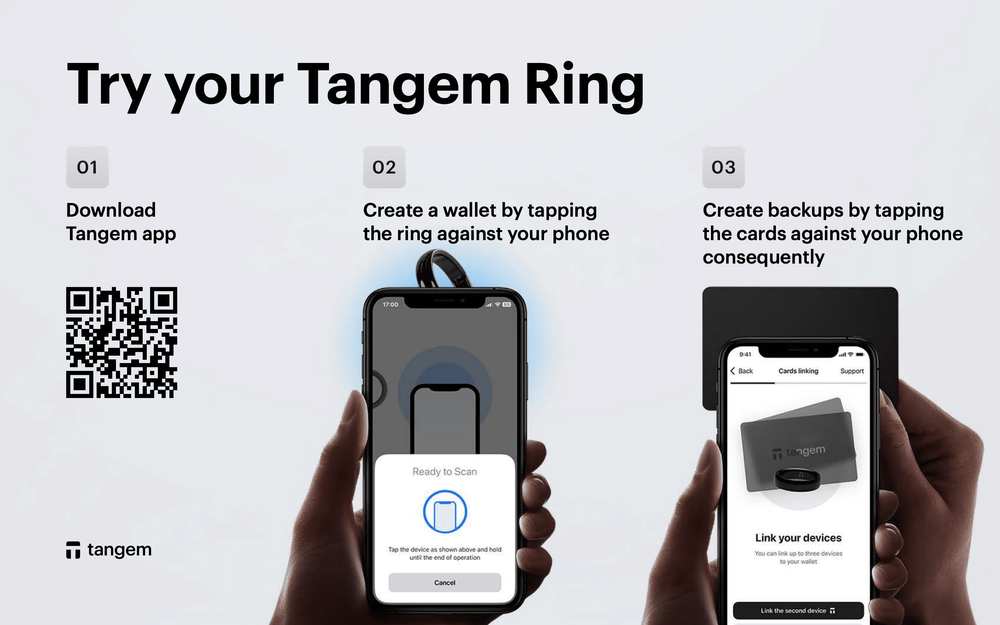
While some advanced features remain under development—particularly multi-account support and enhanced Bitcoin functionality—Tangem delivers excellent value for users prioritizing wide asset coverage, ease of use, and robust security. The card-based form factor, combined with seedless backup through multiple cards, offers unique advantages over traditional hardware wallets.
For cryptocurrency holders with diversified portfolios spanning multiple blockchains, Tangem’s extensive coin and token support makes it an ideal choice. The ability to manage everything from major layer-1 blockchains to obscure DeFi tokens in a single, secure wallet simplifies portfolio management while maintaining best-practice security standards. As Tangem continues expanding features and blockchain support, its position as a leading hardware wallet solution only strengthens.